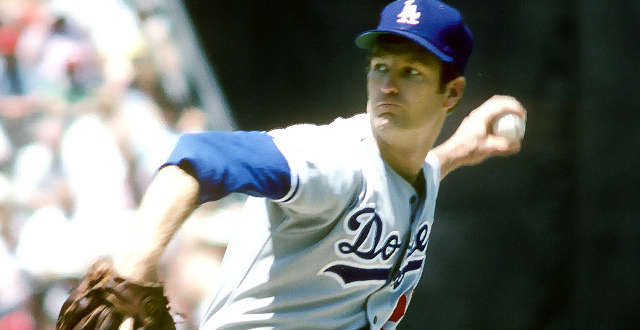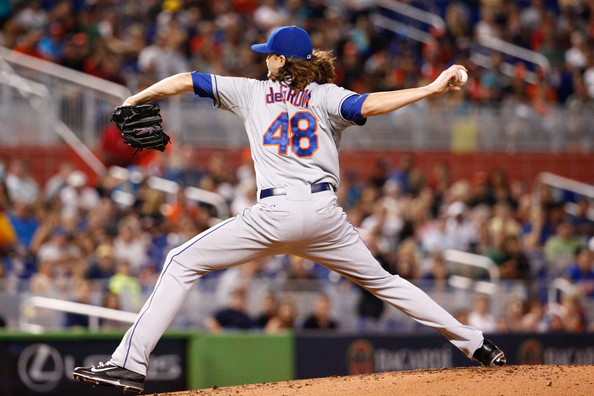
Oliver Perez and Release Points

ollie-release

NOTE: This is a guest post by Matt Himelfarb.

Jerry Manuel deserves credit for usually putting a humorous spin on another of Oliver Perez’s dreadful outings. I always picture him lying back in the manager’s office at Citi Field, his hands clasped behind his head, telling reporters “Ollie’s in a funk right now” and sounding a bullish note about Perez’s eccentrics with an autographed Jonathan Malo photo in a gold-plated frame in the background.

Manuel didn’t have to defend Ollie on Friday night, despite a crushing 6-2 loss to the Padres. Since returning from the DL on July 8th, Perez has been hampered by control problems; entering his last start, he compiled 26 walks in 27 innings of work, giving him a 20% walk rate. To put that in perspective, among qualified pitchers, Pirates southpaw Tom Gorzelanny has the highest walk rate in baseball at 14.29%

As the convenient SNY narrative goes, Dan Warthen advised Perez to take an extended pause when he lifts his leg. As a result, Perez’s mechanics were smooth on Friday night, enabling him to allow just two walks over 6.1 innings of one-run ball.

I’m no pitching guru, so I really wasn’t all that skeptical about this. Using pitch f/x info, I looked for any concrete adjustments Perez made. The first thing I looked at was the consistency of Perez’s release point. The general consensus is that a consistent arm slot contributed mightily toward Perez’s solid outing. After all, control is all about finding a solid, comfortable release point.

To do this, I took his vertical and horizontal release points, and found the standard deviation between each. I did this for his Friday night start, as well as all his other walk-laden outings since he came back. (For those not familiar with this, Josh Kalk wrote a nice primer over at The Hardball Times last September concerning repeatable release points and pitcher effectiveness.)

Oliver Perez Release Point Variation

Date Vertical Var. Horizontal Var.
8/7 (SD) .164 (1.97 inches) .196 (2.35 inches)
8/1 (ARI) .185 (2.22 inches) .18 (2.16 inches)
7/27 (COL) .153 (1.84 inches) .194 (2.33 inches)
7/21 (WAS) .19 (2.28 inches) .196 (2.35 inches)
7/16 (ATL) .246 (2.95 inches) .206 (2.47 inches)
7/8 (LAD) .144 (1.73 inches) .197 (2.36 inches)

To begin with, having almost two inches of variation is undoubtedly below average. Despite all the talk of keeping his front shoulder closed, his horizontal release point is still a major problem. That being said, if you look at his vertical release point, his last start certainly wasn’t his worst outing in terms of consistency. Regardless, as you can see, it does not appear it should make much of a difference anyway. His release point was actually more consistent against Colorado, during which he walked four batters in five innings, and against the Dodgers, where he allowed seven walks in five innings.

Next, I went to see if his actual release point changed throughout all his outings:

Oliver Perez Release Point Averages

Date Vertical R.P. Horizontal R.P.
8/7 (SD) 5.24 (5 ft. 2.88 inches) 2.24 (2 ft. 2.88 inches)
8/1 (ARI) 5.53 (5 ft. 6.36 inches) 2.24 (2 ft. 2.88 inches)
7/27 (COL) 5.44 ( 5 ft. 5.28 inches) 2.23 (2 ft. 2.76 inches)
7/21 (WAS) 5.4 (5 ft 4.8 inches) 2.51 (2 ft. 6.12 inches)
7/16 (ATL) 5.5 (5 ft. 6 inches) 2.4 (2 ft. 8 inches)
7/8 (LAD) 5.39 (5 ft. 4.68 inches) 2.09 (2ft. 1.08 inches)

Again, Perez didn’t seem to make any adjustments with his horizontal release point. It does look, however, that he lowered his vertical release point 2-3 inches. I found this kind of surprising, since we usually associate Ollie’s wildness when he classically drops his arm angle down.

[NOTE by Joe: This could be a flaw in the two-dimensional nature of the pitch f/x technology. When a pitcher throws more overhand, he must push his hand further forward and DOWN in order to direct the ball to the strike zone. That said, it makes sense that the release point was lower. (This path tends to create more leverage, momentum, and velocity, BTW.) The pitch f/x charts don't account for depth, only vertical and horizontal axis points.]

To be honest, I don’t if or how this would affect his command. I’m just logging the results. Going back to the pause, I do know that properly planting your plant foot toward the plate plays a major part in throwing strikes- although I guess in turn it would reflect his release point. [Note by Joe: Matt is correct on both points -- see Isaac Newton for more info.]

If not, though, there are reasons to think Perez’s successful outing was a mirage, and doesn’t say much about him going forward. For one, the Padres can be your prototypical collection of overly aggressive youngsters. They are ranked 14th in the National League in OBP. (.313), just two points ahead of Cincinnati and San Francisco, who are tied for last, and are ninth in walks (one ahead of the Mets in fact). To their credit, they take a decent amount of pitches per plate appearance (3.85 P/PA- league average is 3.82)

Friday night, they seemed very patient (4.04 P/PA). Perez’s average P/PA since returning, however, is 4.08.

Of course, maybe Perez was simply due for an outing like this; a 20% walk rate is probably unsustainable over the long run, even for Ollie. If he can string a few good outings together, we should be able to make some better observations.

Share and Enjoy:
  • Print
  • Yahoo! Buzz
  • Twitter
  • Digg
  • del.icio.us
  • Facebook
  • Mixx
  • Google Bookmarks
  • StumbleUpon
  • NewsVine
  • Technorati
  • MySpace
  • Reddit

Johan Santana is Fixed

According to Dan Warthen — by way of Adam Rubin and other media outlets — Johan Santana had a very good bullpen session, during which he addressed and fixed an issue with his pitching motion.

From Rubin’s blog:

Pitching coach Dan Warthen feels Johan Santana adequately addressed the mechanical flaw in his delivery during a between-starts bullpen session Wednesday at Camden Yards. To get Santana’s fastball to stop cutting unintentionally, they worked to get the ace’s left hand out of his glove quicker, so Santana’s arm acts less like a “catapult” during his motion.

From David Lennon:

“He was catapulting the ball instead of throwing it,” said Warthen, who demonstrated what he meant with a more overhand delivery. “He’s didn’t have that same deception he usually has.”

Neither Warthen nor Santana knows exactly why the Mets’ ace developed that subtle change, but they feel confident it was corrected today. Warthen said he could tell that Santana was throwing with more velocity and his location with the fastball was significantly better.

That is great news, assuming he can carry over the adjustment into a game — which is easier said than done.

And as MetsBlog pointed out, someone here at MetsToday had a theory about Johan’s pitching motion.

In case you forgot, after the Yankees series we stated this in “What’s Wrong with Johan Santana?”

Johan Santana’s velocity is down, as is his command. One thing I notice is his arm dragging behind slightly — it’s out of sync with his hips, and as a result the hips and legs are driving forward a hair too early, and therefore not helping to power the ball. The question is, why is his arm behind? Is it a timing issue, or is there something physically keeping him from firing his hand forward at its usual speed? For example, does he suffer from a mild shoulder injury?

Share and Enjoy:
  • Print
  • Yahoo! Buzz
  • Twitter
  • Digg
  • del.icio.us
  • Facebook
  • Mixx
  • Google Bookmarks
  • StumbleUpon
  • NewsVine
  • Technorati
  • MySpace
  • Reddit

What’s Wrong with Johan Santana?

Johan Santana’s velocity is down, as is his command. One thing I notice is his arm dragging behind slightly — it’s out of sync with his hips, and as a result the hips and legs are driving forward a hair too early, and therefore not helping to power the ball. The question is, why is his arm behind? Is it a timing issue, or is there something physically keeping him from firing his hand forward at its usual speed? For example, does he suffer from a mild shoulder injury?

The command problem is equally concerning — often, problems with location are the result of an elbow issue, and we know Johan’s elbow was barking in late February and early March.

Santana is a “touch and feel” pitcher, in that he relies heavily on his grips on the ball and finger pressure at the release of a pitch. The muscles and ligaments in the forearm and elbow are what control, and provide strength to, the fingers.

To get a rough idea of how the forearm and elbow affect the fingers — and ultimately, a pitcher’s command — simply lay your arm down on a table, palm up. Leaving your arm and hand flat on the table, lift only your middle finger up toward the ceiling. You should feel a bit of tension in several areas of your forearm, including one or two spots near your elbow (both near your elbow bone resting on the table and on the opposite side that is facing the sky).

For almost all pitchers, the middle finger is the “power finger” — the one that is used for applying specific pressure to the ball to make it sink, dive, and break. That’s because it is generally the strongest and also because it is usually the last finger to be in contact with the ball before it’s released. So, if there is an issue with the forearm and/or elbow — such as pain, tightness, soreness, or weakness — then the pressure applied by the middle finger is going to be affected. So now you understand the general rule of thumb (pardon the pun) that an elbow injury can affect command, but not necessarily affect velocity.

In the case Johan, he has had both a loss of command and velocity. From what I’ve seen, he’s also been throwing more pitches, and had a different approach from previous years, in that he’s been more aggressive about getting batters to swing and miss, as opposed to “pitching to contact” on occasion. As a result, he’s been throwing more sliders, which tend to put more strain on the elbow and forearm. Again, this is what my eyes tell me — the propeller heads can crunch the numbers and tell me if my perception is unfounded (though, I don’t necessarily trust the interns recording the pitch types from the press box).

What does it mean? My best guess is that Johan is hiding an issue with his arm. He’s too much of a competitor to use it as an excuse, and he’s too intent on fulfilling the value of his contract and filling the role of “the franchise”, to consider taking off a few starts. He has watched so many players go on the DL, he may feel obligated to pitch through pain — the old concept of the captain must go down with the ship. Or perhaps, it’s simply a temporary thing, something he’s experienced before and doesn’t believe it’s serious, but rather, something he can pitch through.

This is all speculation from a hack blogger / amateur pitching coach. It could be way off. In the end, we may never know what’s caused Johan to fall back to Earth. It may be as simple as him being mortal.

Share and Enjoy:
  • Print
  • Yahoo! Buzz
  • Twitter
  • Digg
  • del.icio.us
  • Facebook
  • Mixx
  • Google Bookmarks
  • StumbleUpon
  • NewsVine
  • Technorati
  • MySpace
  • Reddit

Oliver Perez: Pitch Now, Talk Later

The big news from Port St. Lucie is that Oliver Perez received a “stern talking to” from ace pitcher Johan Santana, presumably to motivate the erstwhile and enigmatic lefthander. This comes only a day after pitching coach Dan Warthen publicly lambasted Perez for being “out of shape”. From Steve Popper’s blog:

Warthen said that Perez got out of shape and underworked while pitching for the Mexican squad in the World Baseball Classic, not even mentioning that when he did pitch he posted a 9.45 ERA in his two games. The real problem is that Warthen said he came back to camp out of shape.

“Even though the weight is about the same as the end of last year he is still not the same guy we saw, the energetic guy,” Warthen said. “Even the life around the clubhouse is not the same.”

Huh … when was the last time you heard an MLB pitching coach — from any team — calling out one of his players in the media? Kind of a strange, if you ask me. (Though, right in line with the Jerry Manuel course “Motivating Men Through the Media 101″, which grew tired in Chicago.)

This most recent report about Santana speaking to Perez is equally strange. Why was it made public? Is it the Mets’ answer to criticism that their clubhouse is leaderless?

In any case, I find the timing incorrect. Opening Day is nine days away, and I don’t know how Oliver Perez is going to “get in shape” so quickly. But more importantly, the Mets — and Santana — are missing the mark by kicking Ollie when he’s down. Oliver Perez is most vulnerable not when he’s doing poorly, but when he’s successful.

Ollie is a unique talent, to say the least. His mechanics have too many moving parts and can quickly fall out of sync, often to disastrous results. If we’ve learned anything from three years of his rollercoaster ride, it’s that he can, and will, eventually get going, but can just as quickly fall. In fact, his biggest problem is that when he is pitching well, his confidence surges to the point where he thinks he can do things he shouldn’t be doing (I believe Rick Peterson called it “freelancing” or something similar).

That understood, the time for a pep talk is not now, but when he’s doing well. When Ollie strings together two or three great outings, THAT’s when Johan Santana should sit Perez down and remind him stay focused, and to continue to do all things that are making him successful — and not be a “cowboy”.

After seeing Perez throw in the most recently televised spring training game, I actually thought he did well. The results were not good, but the process was — and in the spring, it is the process that matters. Ollie returned to the step-straight-back movement behind the rubber, which initiated a straight movement toward home plate. His momentum was gathered nicely and directed in a straight line at his target. Rarely did he fall off toward third base on his follow-through. Those are good signs. His velocity wasn’t great, but I believe that was more the result of concentrating on keeping his mechanics in line than anything else — thought slows you down. His command was off, and that was due to an inconsistent release point, which was due to the mechanical changes — for the last three weeks he’s been throwing in a way that his body is falling away from that straight line, and as a result, his release point is in a different spot. It takes time and repetition (not outside criticism and pep talks) to “get back” what was lost.

Share and Enjoy:
  • Print
  • Yahoo! Buzz
  • Twitter
  • Digg
  • del.icio.us
  • Facebook
  • Mixx
  • Google Bookmarks
  • StumbleUpon
  • NewsVine
  • Technorati
  • MySpace
  • Reddit

Maine’s Stride Length Explained

We mentioned yesterday that Dan Warthen finally did some tinkering with John Maine’s mechanics, as we’ve been suggesting since last June.

One of the adjustments Warthen is making to Maine’s motion is lengthening the stride:

“He’s cutting himself off, landing too soon,” Warthen said. “In the back of his mind, he was afraid to let go.”

So Maine threw about 50 pitches Monday under Warthen’s intense observation. Maine lengthened the stride his front foot took by eight inches. Warthen seemed pleased with the results. “The ball was coming out of his hand very well,” he said. “Still a golden arm.”

Inquiring minds may want to know what that eight inches can really accomplish. In a nutshell, by lengthening a pitcher’s stride, you accomplish three thing:

1. Allow the arm to “catch up” to the body, and time the release closer to the hip rotation / explosion.
A pitcher who strides too short can end up opening his hips too soon, putting the brunt of the pitch’s velocity on the upper body / arm. Kinesiologists suggest that the the length of the stride should be about equal to the total arc of the throwing arm’s motion, starting from the break of the hands to the release point.

2. Increase the amount of force applied to the ball.
This could be partially explained by Newton’s Second Law of Motion (interestingly, if pitching coaches paid even slight attention to Newton, we’d have less pitching injuries). In short, by lengthening the stride you are also generating momentum and increasing the time that force is applied to the baseball. Think about it this way: if you were going to punch someone, would you start your jab at a few inches in front of your chest, or would you rear your fist back to your armpit before punching forward? The latter, of course, because the increased distance of your fist’s path results in more power generated to your opponent’s jaw (try this at your next bar fight). The same principle works when hurling a baseball.

3. Shorten the distance between the release point and home plate.

This is a no-brainer: by lengthening the stride, you also release the ball further away from the rubber, and decrease the distance the ball needs to go. Again, this is simple physics — by decreasing the distance, the batter has less time to react to the pitch — even if the velocity stays the same. This is why Randy Johnson has been so devastating on hitters — because of his height and long arms, his release point is about foot closer to the batter than any other pitcher; his 93 MPH may be perceived as closer to 96 MPH because he’s decreased the time (maybe some math nut can give me the correct numbers, but you get what I mean).

Now the million-dollar question: why doesn’t every pitcher increase his stride?

First of all, a pitching coach worth his salt will indeed lengthen a pitcher’s stride as long as possible, because of the three points above. However, there is a point where pushing more length will hinder rather than help — particularly with pitchers at the MLB level who have been throwing one way their entire lives. Everyone is unique, and everyone throws differently, and I believe biomechanics and kinesiology play a major role in determining the perfect stride length — but I’m not expert enough on either subject to speak intelligently.

In Maine’s case, Warthen apparently saw a shorter stride than Johnny had used prior to his shoulder injury, and it makes sense. As a pitching coach, the stride is one of the first indicators I implore my pitchers to check when they’re having issues — they need to stride the same distance and land in about the same spot every time to pitch consistently. I’d be interested to know if Maine was not only striding shorter, but if he’s striding straight. But that’s for another day.

Share and Enjoy:
  • Print
  • Yahoo! Buzz
  • Twitter
  • Digg
  • del.icio.us
  • Facebook
  • Mixx
  • Google Bookmarks
  • StumbleUpon
  • NewsVine
  • Technorati
  • MySpace
  • Reddit

  • Categories

  • Archives

  • More Sponsors

    fix bad credit
    repairmycreditnow.com - repairmycreditnow has a v phase process that will successfully fix bad credit legally
  • Bad Behavior has blocked 7136 access attempts in the last 7 days.