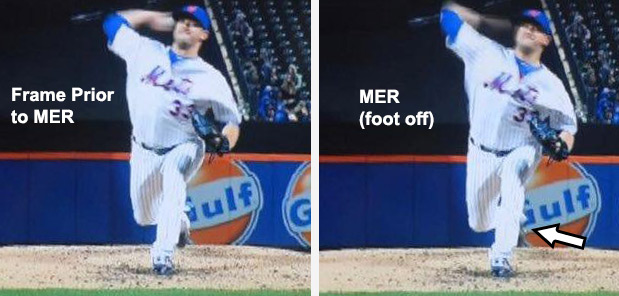
It only took two starts for oft-injured Chris Young to land on the disabled list with the diagnosis of “biceps tendinitis”. Young was reluctant to be removed from the 25-man roster, but understood the decision from the standpoint of the team.
From The New York Times:
Young, who will miss at least two starts, said Friday night that he still felt some soreness in his shoulder but that no M.R.I. was scheduled. He planned to rest it for a few days, then begin throwing on Tuesday.
“The irritation in the biceps tendon is lingering, and the best thing for it is rest,” he said.
From Newsday:
The Mets’ desperate pitching situation actually got worse Saturday when Chris Young was placed on the 15-day disabled list with biceps tendinitis. Removing him from the rotation, however, was better than risking him against the Braves Sunday with a tired bullpen and the possibility of a setback.
“I understand completely,” Young said before Saturday’s doubleheader at Turner Field. “Doing what’s right for the team first, and secondly for my long-term health. Obviously, there’s a level of disappointment, too — this wasn’t what I’d hoped for coming into the season. But you can’t predict these things.”
Young, 31, made only four starts last season because of shoulder problems, and the Mets — taking into account those health issues — signed him to an incentive-laden one-year contract worth a guaranteed $1.1 million. Despite that history, manager Terry Collins said the team has no plans for an MRI, and Young said he doesn’t want one.
“I think at this point, the symptoms are more important than what you can see on the test,” Young said. “The MRI may or may not show something. It may or may not show something completely different than where I feel the discomfort. We’ve talked to the doctors, and treating the symptoms, I think, is the better solution at this point.”
From the above quotes, it doesn’t sound like Young’s issue is so serious; after all, if it was, he’d be getting an MRI, right? And to the common layperson, “biceps tendinitis” doesn’t sound all that dangerous. It sounds like something that might happen when one over-flexes his “muscle” to show off.
In truth, however, biceps tendinitis can be a very serious problem. Don’t take it from me, though — instead, consider what a scientist has to say.
Read more