Mets Game 158: Phillies Beat Braves

Phillies 5 Braves 2

The Mets’ strategy of waiting for the Phillies to lose backfired, as the Braves fell to Philadelphia 5-2. Tim Hudson’s solid outing was marred by a crucial Chipper Jones error (way to go, Larry — even when you’re playing against other teams, you kill the Mets), and the Braves bats were no match for the mighty Kyle Lohse — a certain first-ballot Hall of Famer of the future.

Nationals 9 Mets 6

Meantime, the Mets held the Nationals to less than ten runs for only the third time this month, but couldn’t get their passing game going after the fourth inning. After jumping out to a 5-0 lead in the first four, the offense stopped. You can’t really blame them, though — the guys coming out of the Washington ‘pen resembled Koufax, Gibson, and Feller. When you have lights-out arms like that coming at you, combined with Brooks Robinson at third base, you may as well pack it in and call it a night.

Philip Humber — the first true starting pitcher in history to make his first MLB start for a team in the midst of a pennant race in the last week of the season — pitched much better than his 4-inning, 5-run stat line would indicate. Truth was, he pitched well through the first three, then completely forgot how to throw a fastball — which can be detrimental against big league hitters. He left the game with a 6-3 lead, but also with runners on second and third. Joe Smith did an outstanding job of making sure those runners made it all the way home, and exited the game without recording an out. Because he also left a couple runners on, the next reliever, Pedro Feliciano, felt obliged to jack up Smith’s ERA the same way he did Humber’s. Eventually, Feliciano found a way to record three outs before the Nationals could score an eighth run.

The Nats batters were so tired from all that swinging and running around the bases, they chose to take a nap the next three innings, as Scott Schoeneweis, Orlando Hernandez, and Aaron Heilman tossed up zeroes. However, the nap was a refreshing one, as they battered closer Billy Wagner for another two. But Wags would not allow a tenth run to cross the plate — he was too proud, and reached way down inside of himself to limit the Nats to single digits. A most valiant effort.

Notes

Carlos Beltran clubbed two homers from the right side, and drove in three runs. Moises Alou extended his hitting streak to 30 games, going 2-for-4 with 2 RBI. No one else in the lineup did anything of consequence.

As if it weren’t bad enough that the Phillies are now one measly game behind, putting the Mets’ postseason hopes in jeopardy, the lovely Yankees clinched a playoff berth. Yee ha.

At this point, it’s hard to point the finger at Willie Randolph. It doesn’t matter who he sends to the mound, they give up walks, hits, and runs by the bushelful. No manager in the history of baseball — not LaRussa, not Stengel, not Lasorda, not McGraw — no one can lead a team to victory when you’re giving up seven to ten runs a game. And that’s exactly what the Mets have done over the past two weeks.

It’s getting harder every day to even LIKE this Mets team. Looking at their long, beaten faces, tensed-up bodies, and fearful play is depressing.

Next Game

The Braves send John Smoltz to the mound against Adam Eaton in a last-ditch effort to reduce the Mets’ magic number to three. Luckily, the only team that can’t score against Eaton is the Mets, so the Braves have half a chance.

Unfortunately, the Mets will also have to show up on the field for a contest of their own, a makeup game against the Cardinals. Pedro “The Savior” Martinez goes against Joel Pineiro — a guy the Mets didn’t bother picking up off the scrap heap because their pitching was too deep and high quality to warrant such a gamble. Game time is 7:10 PM; heavy drinking of copious amounts of the strongest alcoholic beverages available begins at 5:05 PM (except for those under the age of 21, of course). Go Braves.

Posted in Mets 2007 Games | 9 Comments

Meaning of the Asterisk

Barry Bonds homerun baseball stamped with asteriskThe public has spoken, and the majority has ruled that the ball Barry Bonds hit as his 756th homerun will be stamped with an asterisk and sent to the Baseball Hall of Shame … er, I mean “Fame”.

As a baseball purist, I’m loving the decision. The ball will go in not so much as a slap in the face to Barry Bonds as much as a symbol of the era in which he played.

Sure, there are the apologists who still run to Barry’s defense, with ridiculous arguments such as “he never failed a test” (no, but he admitted to taking “the clear”); that “it was legal” (no, it was not — MLB may be exempt from antitrust laws but their players are not exempt from US laws applying to its citizens); or “everyone else was cheating too” (no, we don’t know that, and in any case it doesn’t make it right). Whichever side of the fence you’re on in regard to Bonds — or on the steroid issue — is moot. In the end, the asterisk on the baseball will be a visual reminder of what happened to baseball between the debut of Jose Canseco to the initiation of steroid testing in 2006 — a 20-year period in which we can’t be sure who was on what, and whether any game was purely “on the level”.

Ten, fifteen, twenty years from now, when a young boy walks up to the ball in the glass case with the asterisk on it, and asks his father “what’s that all about”, he’ll be given a history lesson on not just Barry Bonds, but the state of baseball from the mid-1980s to the mid-2000s. The story of how fame-seeking, greedy ballplayers juiced. How even greedier owners turned their backs. How all of America was fleeced during the chase on 61 in 1998. How Sammy Sosa suddenly forgot the English language during a congressional hearing. How Rafael Palmeiro perjured himself. Hopefully, the story will end with, “you don’t want to be like those guys”.

Breakfast of Champions

There’s an additional twist to the asterisk on the ball, and fans of Kurt Vonnegut may know what I’m talking about (besides the ironic character flaws that Bonds shares with the novel’s hero Dwayne Hoover).

In one of the first few pages of Vonnegut’s novel Breakfast of Championss, is the drawing of an asterisk. The author, however, describes the sketch as something else — something I can’t re-state here (there are kids reading this blog, after all!). Looking at the asterisk from Vonnegut’s point of view, the stamp on the ball has another meaning — it’s representative of the description many people have for the man who hit it.

Oh, and if we want to play six degrees of separation, “Breakfast of Champions” is obviously the trademarked marketing slogan of Wheaties Cereal. You know, the one that once had Mark McGwire adorned on its front panel?

No doubt the Bonds apologists would argue that a ballplayer could gain 40+ pounds of lean muscle in his late thirties — effectively turn himself into a bodybuilder — through hard work in the gym and eating his Wheaties.

Posted in News Notes Rumors | 2 Comments

Fundamental Slump

The Mets have endured batting slumps, they’re enduring a pitching slump, and now they’re suffering from a fundamentals slump.

How is that possible?

Fundamentals are one of the two aspects of baseball that — supposedly — can’t go into a slump (the other is speed). Either you’re a fundamentally sound team or you’re not, it’s that simple. Doing the right things, and making the correct decisions are a habit — they become instinct, or second nature. Repetition and experience further ingrain the fundamentals into a ballplayer’s game. There’s almost no thinking involved — it’s all reaction. For example, you use two hands to catch the ball. You keep your head down on a grounder. You cover first on a groundball to the right side. You don’t make the first out nor third out at third base. These are just a few of things that a professional ballplayer does over and over and over, until it’s automatic.

And yet, many Mets have suddenly “lost” their fundamentals.

Last night’s debacle was the latest example, with perhaps the most glaring incident occurring in the top of the seventh, on the slow grounder off the bat of Tony Batista. First, Carlos Delgado doesn’t charge the ball, but kind of surrounds it. He seemed to adjust the speed of his body to the slowness of the ball — maybe he was counting the hops, and waiting for number fourteen, who knows? When the ball finally reaches his glove, he turns to second — and no one is there. Apparently, Jose Reyes got a call on his cell phone. So Delgado turns to first, and Jorge Sosa — who perhaps was the one making the call to Reyes — is late covering. And somehow in this mess, everyone is glazing over this fact: where was Luis Castillo? Staying out of the way of Delgado? Setting up for a cutoff, thinking Delgado couldn’t reach first? Trying to call Reyes or Sosa on his cell phone and getting a busy signal? Reyes, Delgado, Castillo, and Sosa — four guys all forgetting how to play baseball.

In the ninth, Endy Chavez is stealing third as Carlos Delgado is striking out. Out of an amazing stroke of luck, he isn’t thrown out for the third out of the inning to end the game. What is going through Endy’s mind at this point? Apparently, the exact same thing that was going on in the mind of Reyes a few games ago, and of Carlos Beltran in the same game as Reyes (but nobody noticed, because like Chavez, Beltran was safe). For Chavez to make such a gross misjudgment, only a few days after watching Reyes and Beltran make the same goofs, is unbelievable. What does Willie Randolph have to do to get through to these guys? Is Sandy Alomar screwing up something in the translation? Do the players need a ball and chain strapped to their ankle? More importantly, why do they need to be told? This is a basic, simple, logical fundamental of baseball.

While the Mets’ fundamentals can’t compare to, say, that of the Braves or Cardinals, they still have been pretty solid all year. You can’t win nearly 90 games in MLB without playing sound baseball. Yet suddenly, in these last few weeks, outfielders are missing cutoffs; infielders are out of position; pitchers aren’t covering first nor backing up bases; relievers are walking leadoff batters with three-run leads; batters aren’t executing bunts; runners are getting picked off and making bonehead decisions. What the heck is going on?

Fundamentals — the one part of the game that shouldn’t go into a slump. Yet for the Mets, it has — and if it continues, there will be no postseason games at Shea.

Posted in News Notes Rumors | Comments Off on Fundamental Slump

Number Four

Duke Snider was the best all-time player to wear #4 for the Mets. But his tenure in the orange and blue — a few months in 1963 — was too brief to consider honoring here.

Instead, we have four former Mets to honor with this magical number — Lenny Dykstra, Rusty Staub, Robin Ventura, and Ron Swoboda. Sure, I could have eliminated Swoboda — who other than a memorable catch in the 1969 World Series didn’t have a terribly significant career — but since the number is four, and we have four guys, what the hey?

Rusty Staub as a New York Met in the early 1970sRusty Staub

Though fans who began following the Mets in the 1980s knew him as the big, fat old guy who came in to pinch-hit for Randy Jones and Pat Zachry (and then headed over to Fifth Avenue to cook up “the best babyback ribs in New York City”), Rusty Staub’s “first” career with the New York Mets was much more memorable. Back when he wore number four, Rusty was the entire offense of the early 1970s Mets lineups. Looking at today’s standards, it’s hard to believe that his 15 HRs, 76 RBI, and .279 batting average in 1973 carried the Mets — but he did. In fact, he was easily the team’s most valuable player, as he was the most consistent batter and the one guy who the opposition pitched around (you must understand, the .239-hitting John Milner was often hitting either third or cleanup … these were tough times). After leading the team in RBI, batting average, and finishing second in HRs in 1975, he was inexplicably traded to the Tigers for an over-the-hill Mickey Lolich (why a team with Seaver, Koosman, Matlack, and zero hitting would trade their best hitter for another pitcher … bleh). Still, Rusty had endeared himself to the Shea faithful with his clutch hitting, and is honored here because without him, there’s no way the Mets enter the 1973 World Series.

Robin Ventura hitting for the New York Mets
Robin Ventura

After ten years of terrorizing American League pitchers with his bat — and winning five Gold Gloves in the process — Robin Ventura became a free-agent and signed with the New York Mets prior to the 1999 season. He was the final ingredient for a team on the cusp of greatness.

Ventura was part of the “Greatest Infield Ever”, and (with all apologies to Edgardo Alfonzo) easily the most-skilled all-around third baseman in Mets history — a position that had been something of a jinxed sore spot for the organization since 1962. Similar to the circumstances surrounding the acquisition of John Olerud two years before, there were whispers that Ventura’s best days were behind him, and perhaps his personality would not be ideal for New York. Like Olerud, Ventura proved the naysayers wrong, big time.

All Ventura did in his first season as a Met was have the best season of his life, assembling career highs of a .301 batting average, 32 HRs, 120 RBI, and 38 doubles. His production was ample protection for cleanup hitter Mike Piazza, and instigated late-season “MVP!” chants from the Shea Stadium fans (he finished 6th in the voting). In August, he suffered a serious knee injury that he played through down the stretch — unbeknownst to the fans until the last week of the regular season, when it was revealed that he had torn cartilage. Nonetheless, he came up huge with heroics at the end, stroking a game-winning, pinch-hit RBI single against the Pirates to help propel the Mets into the Wild Card, and later hitting the historic “Grand Slam Single” to force a Game Six in the NLCS.

Lenny Dykstra with the New York MetsLenny Dykstra

Before he turned into something resembling a WWF champion (roids? no, just a lot of work in the gym, cough cough), “Nails” was a scrappy little “smurf” who was an instant hit with the New York fans for his all-out, gritty style of play and flair for the dramatic. His 1986 rookie year was jam-packed with highlights, web gems, clutch hits, and tobacco juice — a storybook season if there ever was one. Diving catches, drag bunts, and ninth-inning homeruns were his forte, and we came to expect him to do something huge at just the right moment — and he rarely let us down. His walkoff two-run homer against Astros closer Dave Smith in Game Three of the ’86 NLCS goes down as one of the most memorable and important in Mets history. Why he was ever traded to NL East rivals the Philadelphia Phillies — with Roger McDowell and for Juan Samuel, no less — goes down as one of the worst trades in Mets history.

Ron Swoboda of the New York MetsRon Swoboda

The Mets had their own “Rocky” long before Sylvester Stallone came along with his Balboa character. Ron Swoboda was another fan favorite — and like Dykstra was a hit for his all-out hustle, lack of fear, perpetually dirty uniform, and clutch hitting prowess. After hitting 19 homeruns as a 21-year-old in his rookie season of 1965, big things were expected of “Rocky”. Unfortunately, he never quite built on that rookie year, and finished a nine-year career with a .243 batting average.

Ironically, Swoboda was known as an awful fielder, prompting Casey Stengel to once say, “He will be great, super, even wonderful. Now if he can only learn to catch a fly ball.” I say ironic because between “The Catch” made by Willie Mays and “The Catch” made by Endy Chavez, there was “The Catch” made by Swoboda in the 1969 World Series — a valiant, amazing, diving stab of a line drive in the ninth inning of Game Four that saved at least one run and helped the Mets win 2-1 (in extra innings) and defined his place in baseball history. He also had six hits in the Series — more than any other player on either team. What Swoboda lacked in skill, he made up in heart, and will forever be cherished as a hero by Mets fans who had the pleasure of seeing him play.

Posted in Player Notes | Comments Off on Number Four

More Croc Rock!

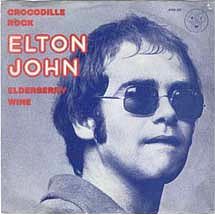
Cover for Elton John single Crocodile RockAs mentioned in the MetsToday postgame (#157) notes, the Shea Stadium organist broke into a rendition of Elton John’s “Crocodile Rock” at the end of the eighth inning during the most recent loss to the Nationals.

First of all, it was great NOT to hear Sweet Caroline — which as every respecting baseball fan knows, is a Fenway Park tradition and has no business being played in any other parks. But more importantly, the Mets exploded for six runs a half inning after Crocodile Rock was being tapped out on the keyboard. Anyone see the connection?

I, for one, hereby demand that Crocodile Rock be played at the end of every eighth inning at Shea from now on. And perhaps there should be some consideration to playing the tune after EVERY inning, if we think it may incite a rally. We have nothing to lose at this point, and it’s certainly less annoying than a jumping monkey. If a fish can save Pittsburgh, perhaps a crocodile can save New York.

All in favor, say, AYE!

Posted in News Notes Rumors | 2 Comments

Mets Game 157: Phillies Lose to Braves

Braves 10 Phillies 6

Starter Chuck James surrendered four runs before finishing four innings, but the bullpen kept the team in the game the rest of the way as the Braves came charging back and eventually pushed past the Phillies. Andruw Jones had a three-hit day, Mark Teixeira hit a three-run homer and Chipper Jones had a two-run shot to help boost the Braves.

Phillies manager Charlie Manuel said, “Our team knows what they have to do.”

Braves manager Bobby Cox was more complete, saying, “We know what we have to do. We have to win.”

Fascinating stuff, guys!

(Nationals 10 Mets 9)

Meantime, in Flushing, Tom Glavine was terrible, Aaron Sele proved his worthlessness, and the Mets played like a bunch of sloppy zombies until there was one out in the bottom of the ninth, at which point they exploded for six runs before manager Willie Randolph informed the team that the Phillies had already lost and there was no need to strain themselves. Jose Reyes was 3-for-5 with two homers and 4 RBI in the losing cause.

Notes

This is a really unorthodox strategy of winning a division (waiting for the second-place team to lose), but if it works, I guess it’s okay. I’m having a really hard time, though, rooting for Chipper and the Braves (to the point where, I refuse to disrespect him by calling him “Larry”).

Moises Alou remains red-hot, going 4-for-5 with 3 RBI — all the RBI coming on his ninth-inning, bases-clearing double.

Shawn Green was 2-for-3 with a run and an RBI. He had a fantastic at-bat in the second, in which he worked the count full and then fouled off seven pitches before stroking an RBI single up the middle. He received a standing ovation upon reaching first base. After collecting his 2000th career hit in the sixth, I thought he was getting another standing O, then realized everyone was actually standing up for the Pepsi T-shirt toss.

Willie Randolph stunned everyone by bringing in Carlos Muniz for his MLB debut with the Mets down by only three in the sixth. Didn’t he say you can’t force-feed the babies into the pennant race? (Personally, I was so overjoyed I nearly fell out of my seat.)

After the eighth inning, instead of playing “Sweet Caroline” (ugh), the Shea Stadium organist broke into — of all things — a jazzy rendition of “Crocodile Rock”. I turned to my friend and said, “Why the heck are they playing Crocodile Rock?” To which he answered, “Because he can play whatever he wants — who’s gonna stop him?” It was true. At the time, the Mets were down by 6 runs, Aaron Sele was on the mound, the bottom of the lineup was due up for the home team for last licks, and everyone was leaving the stadium — the organist could have been playing Dueling Banjos and no one would have cared. (And yeah, we were among the tens of thousands of fans who were on the #7 train during the ninth-inning rally.)


Next Game

Tim Hudson goes to the hill against Kyle Lohse in a 7:05 PM start in Citizens Bank Park. Another win by the Braves will make the Mets magic number three.

If it matters, Philip Humber makes his first Major League start for the Mets in the finale against the Nationals, who will send former Met and current soft-tosser Mike Bacsik to the mound. Game time is 7:10 PM.

Posted in Mets 2007 Games | 5 Comments

Bones to Pick

The Mets’ recent slide has not simply “occurred” due to bad luck or the baseball gods, and despite Willie Randolph’s all-too-calm demeanor, this team is in a state of disarray. We keep hearing that the “talent is there” and that “this team is too good not to be playing in October”. Spare me — I heard the same crap from 1987-1990. I saw Gregg Jefferies — the man who was supposed to be a switch-hitting George Brett — never win a ring. Dave Magadan was supposed to win a batting title. I watched Darryl Strawberry — “the black Ted Williams” — never win an MVP. Hojo could have went 30-30 every year, but his only ring came in the year he was a backup. A rotation of Frank Viola, David Cone, and Dwight Gooden, with John Franco closing, was supposed to be unstoppable.

We know all about the talent on the present-day Mets. It’s oozing from every corner of the clubhouse, and it’s coming from youngsters and oldsters. But for whatever reason, all this talent has not resulted in WINS. That’s not a sabermetric acronym, and I don’t give a hoot about WHIP, VORP, FIPs, BABIP, or WARP-1, WARP-2, or WARP-3. At this point, the talent doesn’t matter, the stats don’t matter — all that matters is that the Mets have scored more runs at the end of a ballgame than their opponent, and thereby earn a “win”. That said, I have some bones to pick on players and issues that may be keeping the Mets from those elusive “Ws”.


Jose Reyes

In March, and through the middle of April, it looked like Jose Reyes might improve upon 2006 and become a bonafide superstar. He was waiting well on and seeing pitches better than ever, letting the ball get deep, keeping his hands back, taking walks, and swatting the ball the other way. Once in a while, he’d get an inside pitch and turn on it viciously.

What happened to that guy?

Somewhere along the line, he stopped waiting on pitches. He started swinging before recognizing — maybe it evolved from guessing. Going to the opposite field happened less and less, and his line drive swing was affected by hands dropping — creating an uppercut (from fatigue?). This change in his approach and his mechanics resulted in more swinging and missing, and less hits. Which in turn led to reduced confidence at the plate. Which resulted in more guessing, and swinging too early, rather than staying back and trusting his hands.

Lately, he’s added pressure to his slump cocktail. So in addition to the mechanical flaws, the poor approach, and the lack of confidence, Reyes is now pressing as well — trying to do too much. The numnuts who are blaming Rickey Henderson for the demise of Reyes are simply lazy know-nothings who find it easier to pick a scapegoat. If anyone is at fault, it is Reyes himself as well as Willie Randolph and the entire Mets coaching staff for not taking control of Jose’s various issues. How about putting on the take sign, and forcing Jose to watch pitches go by. But not just wave a fake bunt and take for the sake of taking — tell Jose to take his normal stride, keep his head down, get the hands back, and watch the ball into the catcher’s glove. Maybe he’s been forced to do this a half-dozen times — if so, it’s not enough. He needs to do this at least once or twice every at-bat until he’s out of his slump. He needs to then concentrate on zoning middle-out, waiting on the ball, and dropping the barrel on top of the ball, and hitting grounders and liners to the opposite field. Again, he does this occasionally, but needs to do it all the time until he has his “March swing” back. And here’s a crazy idea: how about telling Jose to drop at least one bunt a game? I’ve seen Jose show bunt — but when was the last time he actually bunted for a hit? Does he have even ten bunt hits this year? Shouldn’t he have about twenty? Maybe he does, and I missed them. Yes, I know Willie has mentioned that Jose should bunt more, and Howard Johnson is in his ear about hitting the ball on the ground, but apparently they need to find a new way to motivate him. Fine him if he hits a popup. Buy him a steak if he goes the other way. I don’t know — maybe that stuff doesn’t work with guys who make millions. But the point is, it’s the coaches’ job to get through to him — and Reyes, due to his youth, is one of the few Mets who can still be affected and changed by good instruction.

Mike Pelfrey

Pelfrey looks great for two or three innings, then starts unraveling — what’s with that? How about we look closer … could it be an issue with men on base? It does seem that Pelfrey is less effective when runners are on — and the numbers bear it out. Opposition batting average with nobody on: .287 (yikes, that’s higher than I wanted to know … but not part of the argument). With runners on: .310. With runners on first and second: .391. First and third: .429. Bases loaded: .100. Huh? OK, that last one is a small sample — 10 at-bats — and there is the added glitch that 7 runs have scored despite the low average. However, I’m wondering if Pelfrey’s issues have to do with working out of the stretch? And perhaps, with bases loaded, he’s returning to the full windup?

Granted, no matter which way you look at it, Pelfrey gives up a lot of hits. But then, that’s part of being a sinkerball pitcher. The way his numbers balloon when runners reach base is alarming, and indicative of someone who is very uncomfortable — and inexperienced — with runners on base. It makes sense — he didn’t allow many baserunners in college, and probably was the same way going back to little league. Pitching from the stretch was rather foreign to him until last year, and keeping runners close is likely a major issue for him right now. There’s nothing the Mets can do to fix this now, but a.) it’s clear he won’t be able to help in the postseason out of the pen; and b.) it’s another glaring point toward the fact that Pelfrey was (and is) much further away from MLB-ready than Mets officials’ believed (or let on). He’s nowhere near the “polished” pitcher the scouts told us he was — some comparing him to Mark Prior as far as advancement. Pelfrey needed — and still needs — more game experience in the minors. Had the organization realized this, perhaps they would not have been so quick to part with Brian Bannister. As it is, the team has been depending on Pelfrey to “step it up” in the heat of the pennant race — when he has no business pitching at this level.

Lastings Milledge

Young man, we need your bat, your spark, and your penchant for the dramatic. Please keep your cool and remember that the team comes first. Borrow Pelfrey’s mouthpiece if it will help you keep quiet.

Two-out Hitting

The Mets’ team batting average is .275. Their batting average with runners on is .272. Runners in scoring position, it’s .274. All pretty consistent. However, with runners in scoring position and two outs, it’s a dismal .233 — 25th in MLB and two spots ahead of the Nationals, who managed to score 11 runs on two-out base hits in Monday’s game. In contrast, their opponents are hitting a solid .250 in the same situation — that’s one hit every four at-bats. Not terrible — it places them 18th in MLB. But at least it explains my perception that the Mets’ opponents take better advantage of runners moving at the crack of the bat.

How can a team drop more than 40 points in team batting average in such a situation? Too much thinking? Not enough thinking? Over aggressive? Under aggressive? Apple in the throat? I don’t think it’s bad luck — not in a 660+ at-bat sample. It’s officially an issue. Managing base hits with two outs is a huge advantage, because the runners are off on contact. How many times have we seen our Mets relievers go full-count with two outs and runners on? And how many times have we seen our Mets hitters go full-count with two outs and runners on? Personally, I think it’s a rarity, and would like to find the numbers to back it up — because usually the Mets hitters don’t get that far in an at-bat in those situations. If the stats support that theory, then perhaps it’s an issue of patience and/or pitch selection. Whatever the case, it needs to be investigated — maybe it’s not too late to fix.

Bullpen Management

Oh boy, this could be an entire article unto its own … but I’ll try to keep it brief. Something struck me during an SNY interview with — of all people — Scott Schoeneweis. The Show was asked if he thought the Mets bullpen could have been more effective this year, and his answer was, more or less, that he thought the pen had done a very good job considering the circumstances — insinuating that the relievers were overworked. And you know what? He’s right.

While it’s true the Mets starters have pitched effectively this year, they haven’t show much in the way of longevity in games. (It’s not just the Mets starters, of course, it’s an epidemic throughout MLB, but we’re focusing on our team here.) Out of 156 games started, there have been two complete games. Oh, but not really — those two “complete” games were actually rain-shortened, five-inning games pitched by John Maine and Tom Glavine. So in reality, no Met has finished what he has started this year. And, on average, Mets starters do not pitch past the sixth inning — their 913 innings this year averages out to 5.8 innings per start. That puts them somewhere in the middle of the pack as far as MLB, but the comparison to other teams is irrelevant. The point is, the Mets’ bullpen has had to pick up at minimum 3 1/3 innings every game — remember they also have to pick up all the extra innings in tie ballgames as well. Consider also that the relief corps has been pretty stable, and more or less the same faces since Opening Day — Schoeneweis, Billy Wagner, Pedro Feliciano, Aaron Heilman, and Aaron Sele have been behind the outfield fence nearly every game. Guillermo Mota has been part of the nucleus since late May. The only significant change in roles was Joe Smith replaced by Jorge Sosa, and the only other reliever of consequence was Ambiorix Burgos, who appeared in 17 games.

With the same arms coming out every day, with Sosa replacing Smith as the only “refresher”, the bullpen has been pretty much burned out — and their recent meltdowns shouldn’t be a surprise. Aaron Heilman and Pedro Feliciano have each appeared in 75+ games — nearly half of the teams’ games. Did you know Joe Smith appeared in 52? No wonder he came down with tendinitis halfway through the season. The Show’s been in 67, and Mota 51. I’m not sure how best to fix this issue, but the strain could have been somewhat alleviated if the Mets either used Aaron Sele (33 games) more often, or replaced Sele with someone Willie Randolph had more trust in. While Sele has had a few solid, and important outings (including one a few days ago), the fact he was taking up a roster spot yet only being used once every two weeks was a complete waste of a role. I understand that Darren Oliver defined the role in 2006, but even Oliver got into 45 games — many of them important appearances. Sele was used almost exclusively for blowouts and garbage innings — why? You don’t need a guy hanging around for 162 games to do that. If you get blown out one game, bring in a starter, or ask one of the relievers to take one for the team, then bring up a minor leaguer the next day to cover innings the next few days. Having that one extra guy coming in from the bullpen would have given Heilman and co. more rest, and perhaps the entire corps wouldn’t be gasping for breath right now.

Conclusion

There are other bones to pick regarding this year, but my fingers are tired from hitting the keys. Perhaps if I had a relief blogger to come in, we could go on. But then, you might need a relief reader.

Let’s just beat the Nationals already, and get this thing over with. Waiting for the Phillies to lose is not my idea of “enjoying the pennant race”.

Posted in News Notes Rumors | 2 Comments

Mets Game 156: Loss to Nationals

Nationals 13 Mets 4

Yikes.

I’m not sure what’s more disconcerting — the fact the Mets could manage only three runs against Matt Chico and Saul Rivera, or that the worst offensive team in MLB has now scored nine or more runs in a game against them in three of their last four meetings.

It’s OK if the Nats have a blowout against the Mets once or twice … it’s called an anomaly. But to pound out nearly 40 runs in four games? That’s called a red flag.

Mike Pelfrey cruised through three, then unraveled. The suddenly slugging Nats scored two in the fourth, three in the fifth, and two in the sixth — Pelfrey charged with all seven runs (though Joe Smith didn’t help, allowing two inherited runners to score on a double).

Pedro Feliciano pitched a scoreless seventh, but the Nats jumped all over Guillermo Mota and Dave Williams in the final two innings, adding another three in each frame. The scoring was capped by a three-run, pinch-hit homer by Ryan Langerhans — he of perhaps the worst offensive output of any position player this year.

Notes

Moises Alou extended his hitting streak to 28 games with a double in the sixth. David Wright was 3-for-5 with a double of his own — his 41st of the season. Carlos Delgado his his 30th double of the year, and went 2-for-5.

If there was one positive in the game, ironically, it was the negative performance by Dave Williams. It sounds crazy, I know, but consider this: there’s no way Willie Randolph can lose sleep over the decision to allow Humber pitch on Wednesday after seeing Williams pitch the ninth. In fact, it’s mind-blogging that there was even a question between the two. As Omar Minaya stated about Humer, “he’s our best available option.”

Anyone notice that Ronny Belliard gets REALLY up for the Mets? He’s batting over .300 against the Mets, with 11 RBI (one-fifth of his total output). Is it possible the Bronx native was miffed that the Mets wouldn’t give him a look to fill their second base position last winter?

The last 11 runs scored by the Nats came on two-out hits. Ouch.

Tomorrow, we as Mets fans must root for Chuck James and the Atlanta Braves. I think I may be sick.

Next Game

Tom Glavine takes the ball in an absolute must-win against Jason Bergmann. Not to put any pressure on you, though, Tommy. Game time is 7:10 PM. I’ll be biting my nails in the Loge, section 20. Please stop by and share several adult beverages with me if you attend the game.

Posted in Mets 2007 Games | 7 Comments